

A large proportion of women of reproductive age experience pain during menstruation every month, and this problem does not disappear when they come to work. It's not just a few hours of discomfort. For many women, menstrual pain significantly impacts their workday, affecting concentration, performance, and mental well-being.
Despite all this, menstrual pain often remains overlooked in corporate culture, and women face pressure to function as usual and not show any signs of discomfort. What are women's experiences, and what can companies do to improve the situation?
Menstrual pain, or dysmenorrhea
Dysmenorrhea, or painful menstruation, affects more than half of women, usually for 1 to 2 days each month. (1) Sometimes it is mild discomfort, but for some women, the pain is so severe that it prevents them from performing daily activities for several days a month. In addition to typical cramping abdominal pain, other accompanying symptoms may appear, such as headaches, nausea, dizziness, or vomiting.
According to a Femvie survey, almost eight out of ten women experience pain or discomfort related to their menstrual cycle during working hours. Along with bloating and fatigue, painful menstruation is among the three most common symptoms that negatively affect women's functioning at work. These numbers point to an overlooked but fundamental problem that has a real impact on women's work performance and mental well-being in the workplace. More than half of the women in the survey also stated that they experienced reduced productivity due to pain, and almost a third had to take time off due to the discomfort.
"I have very severe pain that is not very compatible with any activity on the first day of menstruation, and even though I have the option of working from home and more or less flexible working hours, it is very challenging," one of the participants in the survey confided.
How painful menstruation can affect work performance
Severe menstrual pain is not just "discomfort." In many cases, it significantly complicates women's normal work functioning. It can affect concentration, performance, communication skills, and physical presence in the workplace:
-
Impaired concentration and overall fatigue. Pain in the lower abdomen, head, or back can distract from work and reduce cognitive capacity and performance.
-
Emotional fluctuations and increased stress. Hormonal changes combined with pain and performance pressure can lead to irritability, anxiety, or frustration. Many women keep their problems silent because they don't want to appear overly sensitive or be perceived as weak, but this often leads to internal tension, which only deepens the overall problem.
-
Physical limitations. Painful menstruation can make prolonged sitting, standing, or moving impossible. This is a problem both in office professions and in physically demanding jobs. Some women suffer from heavy bleeding, dizziness, or weakness that prevents them from comfortably performing their work or moving without problems.
Stigma in the workplace
Many women face these difficulties in silence. According to the Femvie survey, 67% of women would not feel comfortable telling their manager that they are taking time off due to menstrual pain.
These numbers show that many companies still fail to create an environment where women can openly communicate about their health without fear of trivialization or negative consequences. The silence and persistent taboo mean that the needs of women of reproductive age are often overlooked, as if the menstrual cycle had no impact on daily functioning at work.
First steps toward improvement
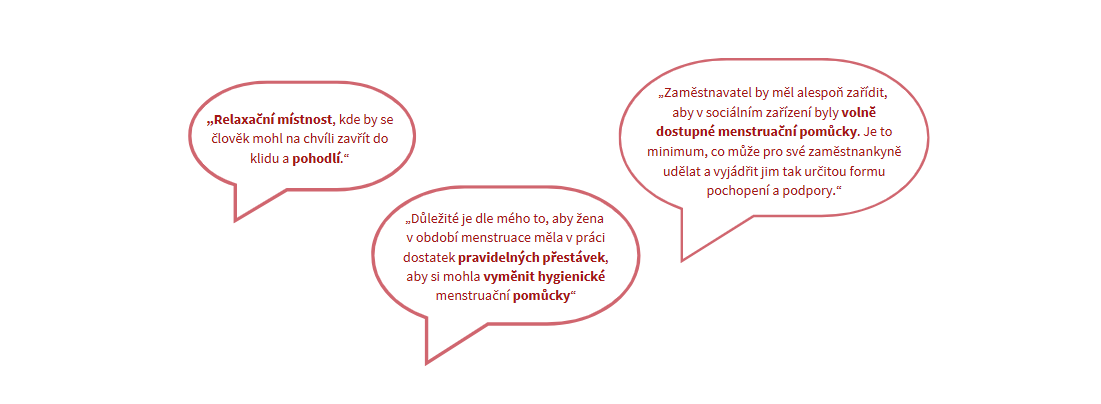
To help women manage work with less discomfort during painful menstruation, simple but empathetic steps from employers can make a significant difference. Flexible working hours, the option to work from home, or an extra short break during the day allow women to better respond to their body's condition.
Easy access to clean toilets and hygiene products is also helpful. Not only for comfort but also as a prevention of unpleasant and stressful situations. Menstruation often comes unexpectedly; according to the Femvie survey, 62% of women had to rush to buy necessary products during working hours.
The ability to reach for a tampon or pad directly at work can be a lifesaver, and not just before an important meeting, presentation, or consultation. The stress of possible leakage or the urgent search for menstrual products is still a common reality for many women. Yet, it takes little to make them feel safer and better able to concentrate on their work.
The top 3 benefits that women would appreciate at work, according to the survey, are:
-
Menstrual leave
-
Access to menstrual products
-
Flexible working hours
Menstruation is a normal part of life, but for many women, it creates an obstacle to work every month. An open approach, respect, and empathy are the first steps to making women feel safe and able to function at work without shame or pain.
How Femvie can help
At Femvie, we help companies, hotels, fitness centers, schools, universities, and co-working spaces to integrate women's health into their environments.
Our services include:
-
Supplying organic menstrual products (tampons and pads) for employees, students, and visitors
-
Educating employees and HR teams on menstrual and hormonal health through workshops and webinars
-
Consulting in well-being and inclusion, helping to build a considerate work environment
-
Educational and practical materials to raise awareness and prevent women's health issues
We believe that women's health is not an individual problem but a part of corporate culture. Together, we can create an environment where women feel respected, heard, and supported – every day, in every phase of their cycle.
Interested in collaboration? Write to us at hello@femvie.com

All results of our research, including concrete proposals for improving working conditions during menstruation, can be downloaded in PDF document Menstruation and menstrual hygiene in the workplace HERE.
What else to read on the Femspace blog?
Don't forget to follow us on Instagram to be the first to know about all new blog posts on Femspace or on the Femvie e-shop!
Femvie products that can help you
We have selected products related to this topic that can support your health:
- 🌿 Organic pads — certified organic pads without chemicals
- 🌿 Organic tampons — organic tampons made from certified organic cotton
- 🌿 Ultra-thin organic panty liners — discreet protection for every day
- 📦 Carefree subscription — your organic menstrual products automatically every month
- 🎁 Trial package — try Femvie organic menstrual products
Frequently Asked Questions
What are organic menstrual products?
Organic menstrual products are made from certified organic cotton without pesticides, plastics, or bleaching chemicals. GOTS certification guarantees ecological processing from field to product.
Are organic tampons safer than conventional ones?
Yes. Conventional tampons may contain trace amounts of pesticides and synthetic fibers. Femvie organic tampons are certified, hypoallergenic, and gentler on intimate areas.
How does Femvie subscription work?
With the Carefree subscription, you set the delivery frequency, and your favorite organic products arrive automatically. You save time and never run out of menstrual products.


