

Is a holiday, wedding, or another special event approaching, and your period is scheduled to arrive at the same time? You might be wondering how to delay its onset – and, more importantly – if it’s even safe for your body. Let's look at a few options and their potential risks that need to be carefully considered beforehand.
Delaying menstruation naturally
The internet is full of various tips and old wives' tales on how to naturally influence cycle length and induce or delay menstruation, whether through selected herbs or specific foods. However, none of these methods are scientifically proven to be reliable. Therefore, most women opt for hormonal assistance.
Delaying menstruation with hormones
If you are currently taking hormonal contraception, delaying your period is a relatively simple process. Combined hormonal contraception is typically taken for 21 days, followed by a seven-day break, during which so-called withdrawal bleeding occurs.
You can then postpone your period by simply skipping the usual week-long break and immediately starting a new pack. This will delay bleeding by the number of days you continue taking it without a break. Once you take a break, your period will usually start.
How does hormonal contraception work? Read the full article about it.
A one-time delay of menstruation is also possible without regular contraceptive use, using prescription medications that are started several days before the expected start of menstruation. These medications contain progestogens (e.g., Norethisterone), which mimic the function of the hormone progesterone in the body and keep its levels high, thereby preventing the shedding of the uterine lining. Menstruation does not occur while the medication is being taken. After discontinuing the medication, progesterone levels usually drop sharply, and menstruation starts within 2–3 days.
Is delaying menstruation safe?
In most cases, short-term postponement of menstruation using hormones can be safe – ideally, it should be an exceptional situation and always discussed with a gynecologist beforehand.
It is important to realize that even short-term use of hormonal preparations can have side effects. These may include spotting, changes in bleeding intensity or duration, water retention, breast pain , or mood swings. Hormonal contraception itself can, in some cases, cause nausea, digestive problems, or irregular bleeding.
Among other things, hormonal contraception fundamentally affects the natural menstrual cycle – often completely suppressing or artificially altering it – which can mask important signals about a woman's health. Menstruation is one of the key indicators of hormonal balance and the overall functioning of the female body. Long-term suppression of these natural cycles can make it difficult to detect various problems early.
If you want to better understand your cycle and natural methods of family planning and contraception, we recommend the webinars Cycle Harmony and Symptothermal Method in Practice.
Enjoy your holiday even with menstruation? It's possible!
If your period does arrive during your holiday, don't despair. You can still fully enjoy trips and time in the water. Make sure you have plenty of intimate hygiene products on hand. Whether you prefer pads or tampons, you'll find both with us!
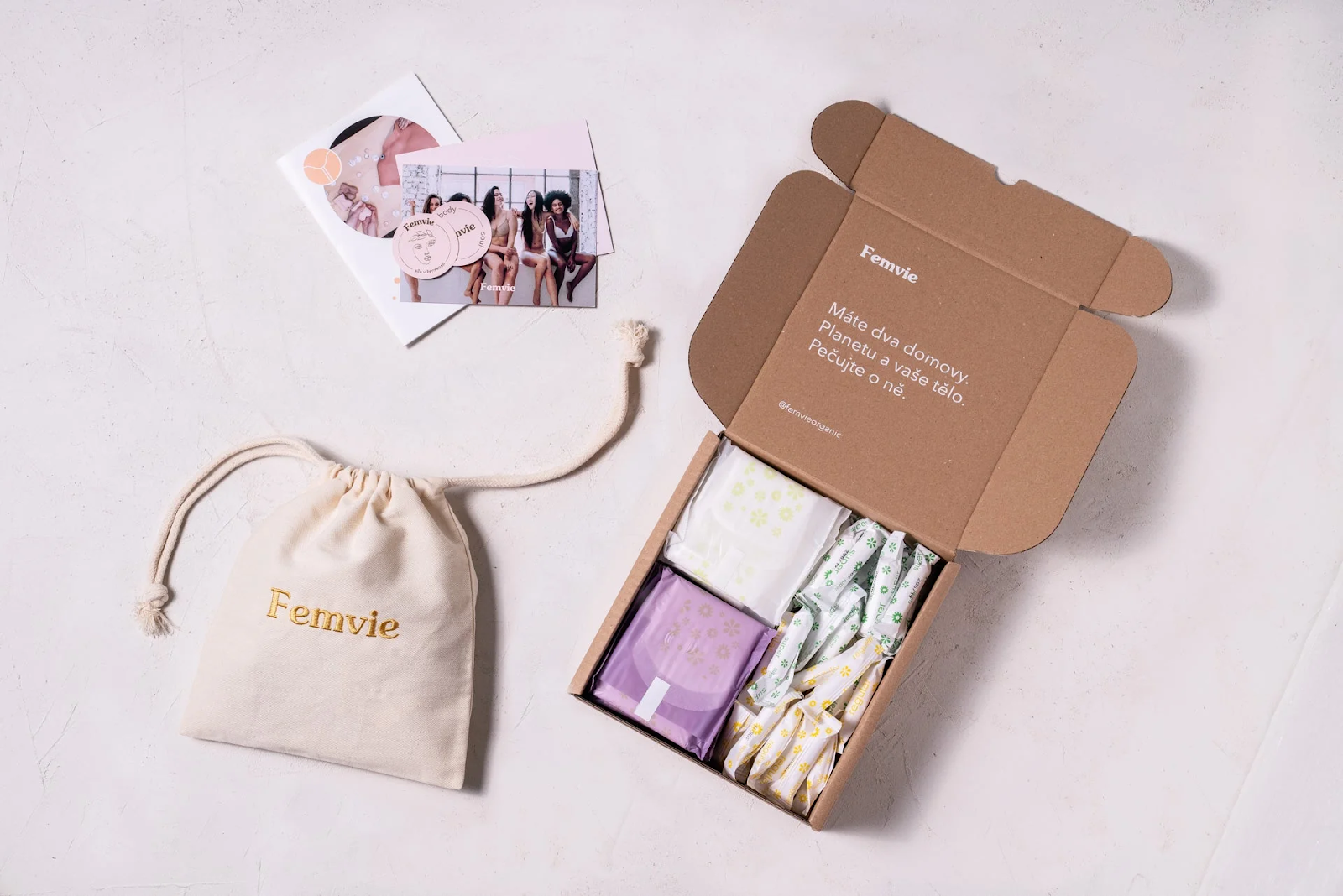
With the Carefree Subscription, you never have to scramble for menstrual protection products at the last minute. You simply combine the quantity and type of products you want, and every 3 months, we automatically deliver a supply of GOTS-certified cotton pads and tampons right to your door!
You might also be interested in:
- Can travel affect your period?
- Implantation bleeding or period?
- 7 tips for women's intimate hygiene
- Hormonal contraception through the eyes of a woman with endometriosis
- What is Premenstrual Dysphoric Disorder (PMDD)?
- 5 tips on how to prevent blood leakage and how to best manage the situation
- My girlfriend got her period. What (not) to do?
Don't forget to follow us on Instagram to be the first to know about all the news on the Femspace blog or the Femvie e-shop!
Femvie products that can help you
We have selected products related to this topic that can support your health:
- 🌿 Organic Pads — certified organic pads without chemicals
- 🌿 Organic Tampons — organic tampons made from certified organic cotton
- 🌿 Ultra-thin Organic Pantyliners — discreet protection for every day
- 📦 Carefree Subscription — your organic menstrual products automatically every month
- 🎁 Trial Pack — try Femvie organic menstrual products
Frequently Asked Questions
What are organic menstrual products?
Organic menstrual products are made from certified organic cotton without pesticides, plastics, or bleaching chemicals. GOTS certification guarantees ecological processing from farm to product.
Are organic tampons safer than conventional ones?
Yes. Conventional tampons may contain trace amounts of pesticides and synthetic fibers. Femvie organic tampons are certified, hypoallergenic, and gentler on intimate areas.
How does the Femvie subscription work?
With the Carefree Subscription, you set the delivery frequency, and your favorite organic products arrive automatically. You save time and never run out of menstrual products.


